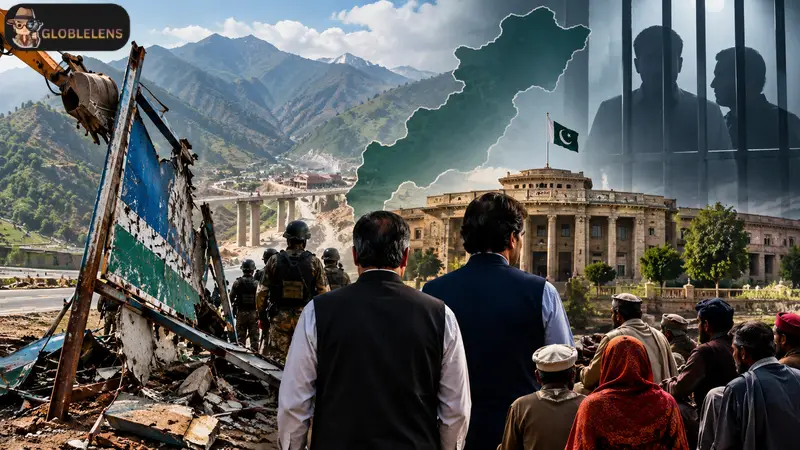
The political landscape in Khyber Pakhtunkhwa has entered a phase of intense confrontation and administrative uncertainty. Recent developments indicate an aggressive campaign targeting development project signboards and infrastructure initiatives associated with the previous provincial administration. Security measures and administrative directives have led to the removal of hundreds of developmental markers, coupled with policy decisions curtailing ongoing public welfare projects. Observers note that these actions have deepened regional grievances, particularly among local populations who feel marginalized by federal directives and security operations.
Compounding the developmental setbacks, political leadership in the province has faced severe disruption, including the unexplained detention of key elected representatives such as the provincial speaker and chief minister. The absence of transparent communication regarding their whereabouts has raised serious questions among legal experts and human rights advocates regarding adherence to constitutional norms and democratic processes. Furthermore, opposition parties and regional stakeholders have largely distanced themselves from proposed advisory councils, citing a lack of legitimacy and representation. This governance vacuum has severely impacted public service delivery, leaving local communities vulnerable to economic stagnation and security vulnerabilities.